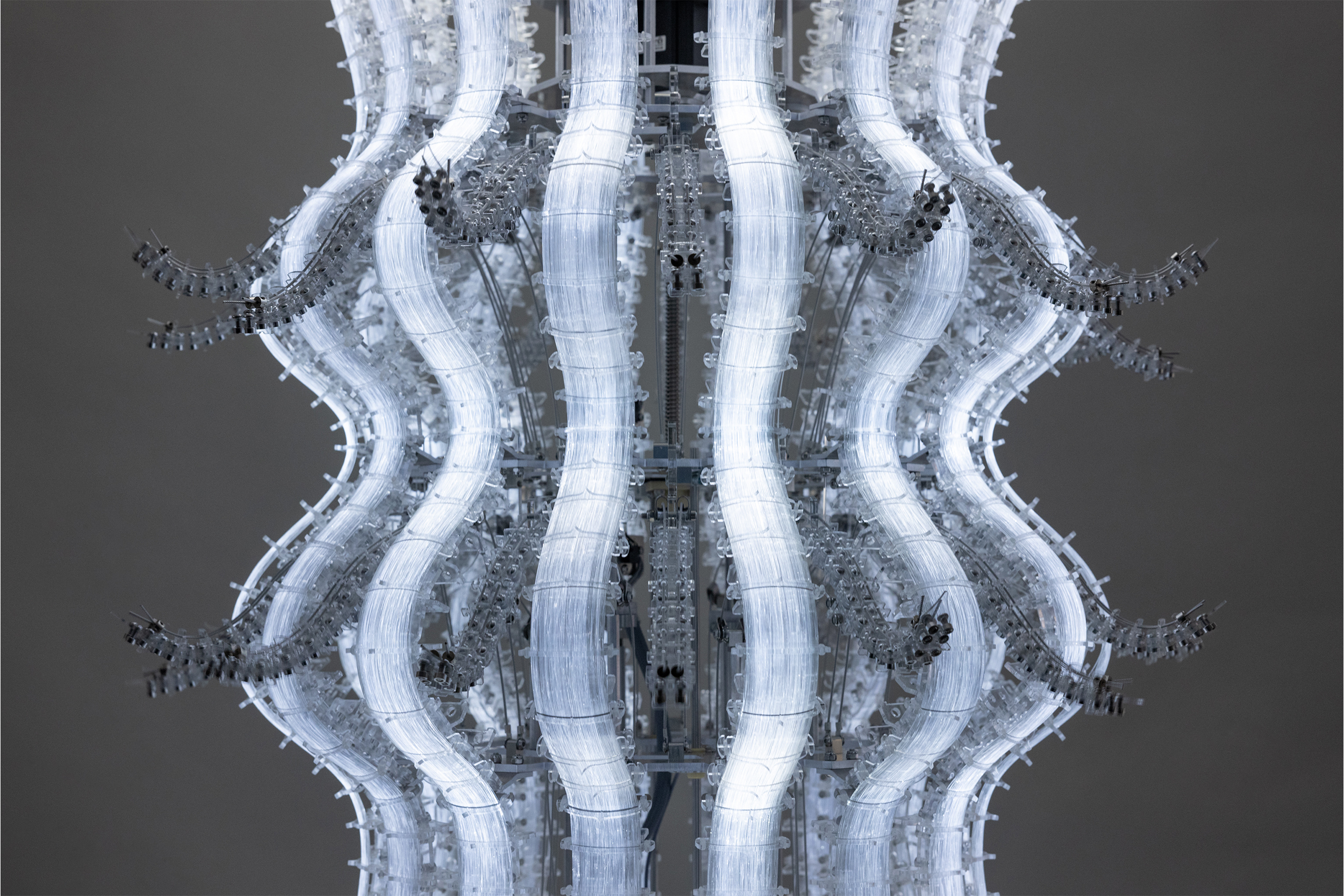
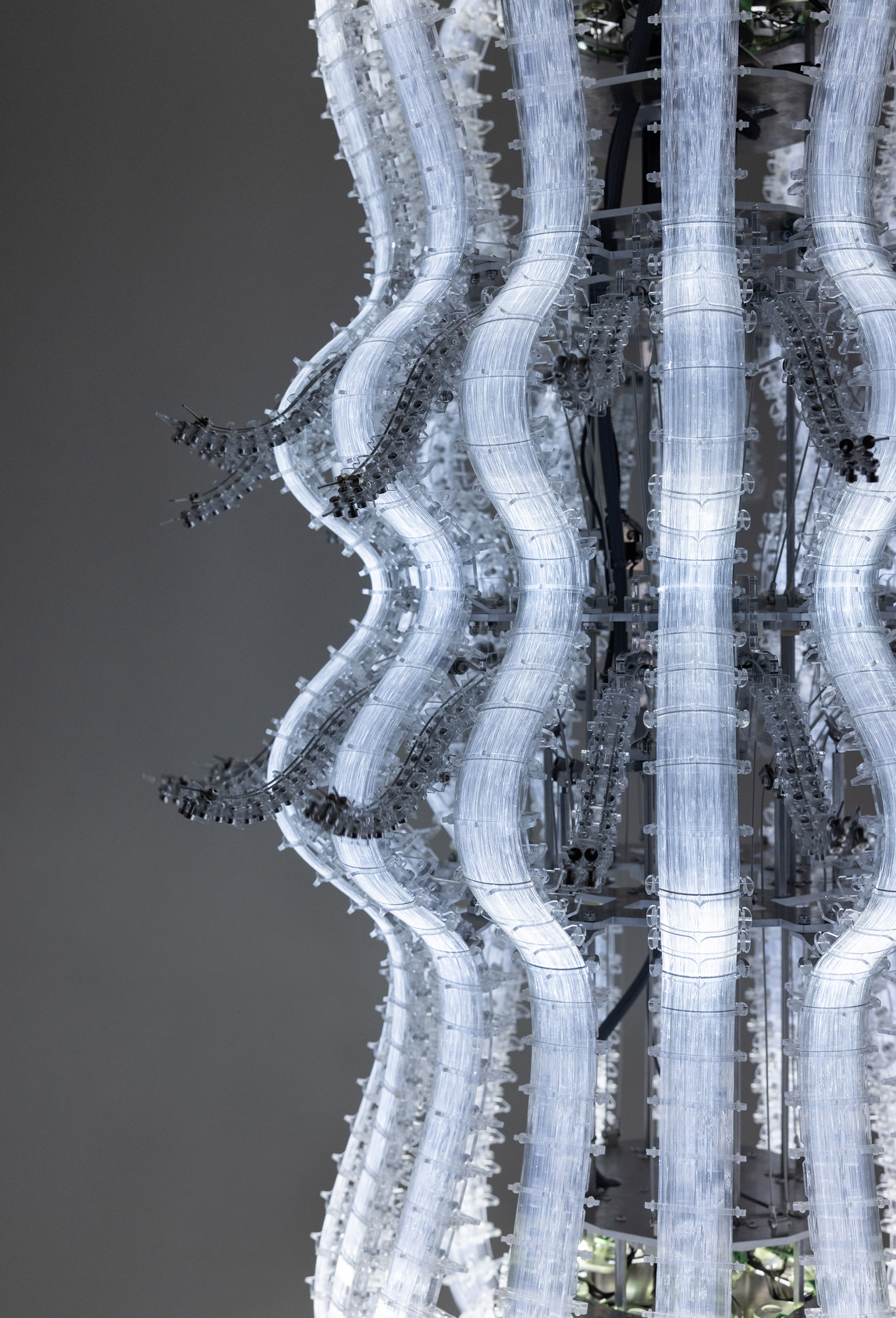
Lithic Infinite
2023-2024
PMMA optical fiber, LEDs, silicone, acrylic, epoxy, aluminum, stainless steel, steel, brass, motors and microcontrollers
117.2 x 67.3 x 67.9 cm
Winsing Arts Collection
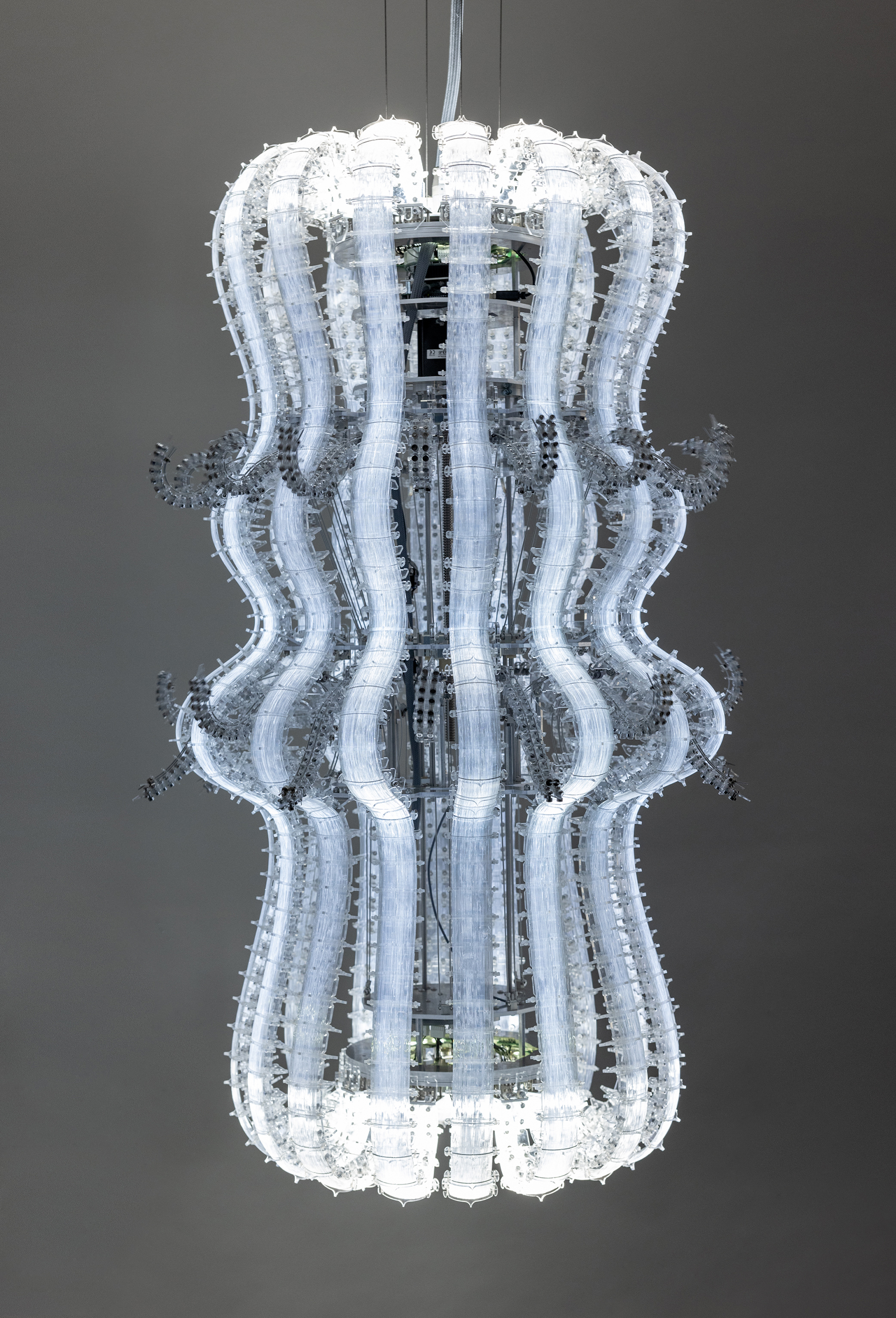
Lithic Infinite
2023-2024
PMMA optical fiber, LEDs, silicone, acrylic, epoxy, aluminum, stainless steel, steel, brass, motors and microcontrollers
117.2 x 67.3 x 67.9 cm
Winsing Arts Collection
Anicka Yi’s “Radiolaria” resemble giant living cells, seemingly pulled from the ocean and left suspended, gently undulating through the gallery space. Waves of light flicker along the delicately woven fiber optic surface, revealing their mechanical makeup. These “bio-techno” lifeforms reflect Yi’s notion of the “biologized machine,” a means for imagining communication between artificial intelligences and organic lifeforms.