Artwork
Artist

Untitled (Hanging)

c. 1970
Acrylic on hessian
200 x 95 cm
Winsing Arts Collection
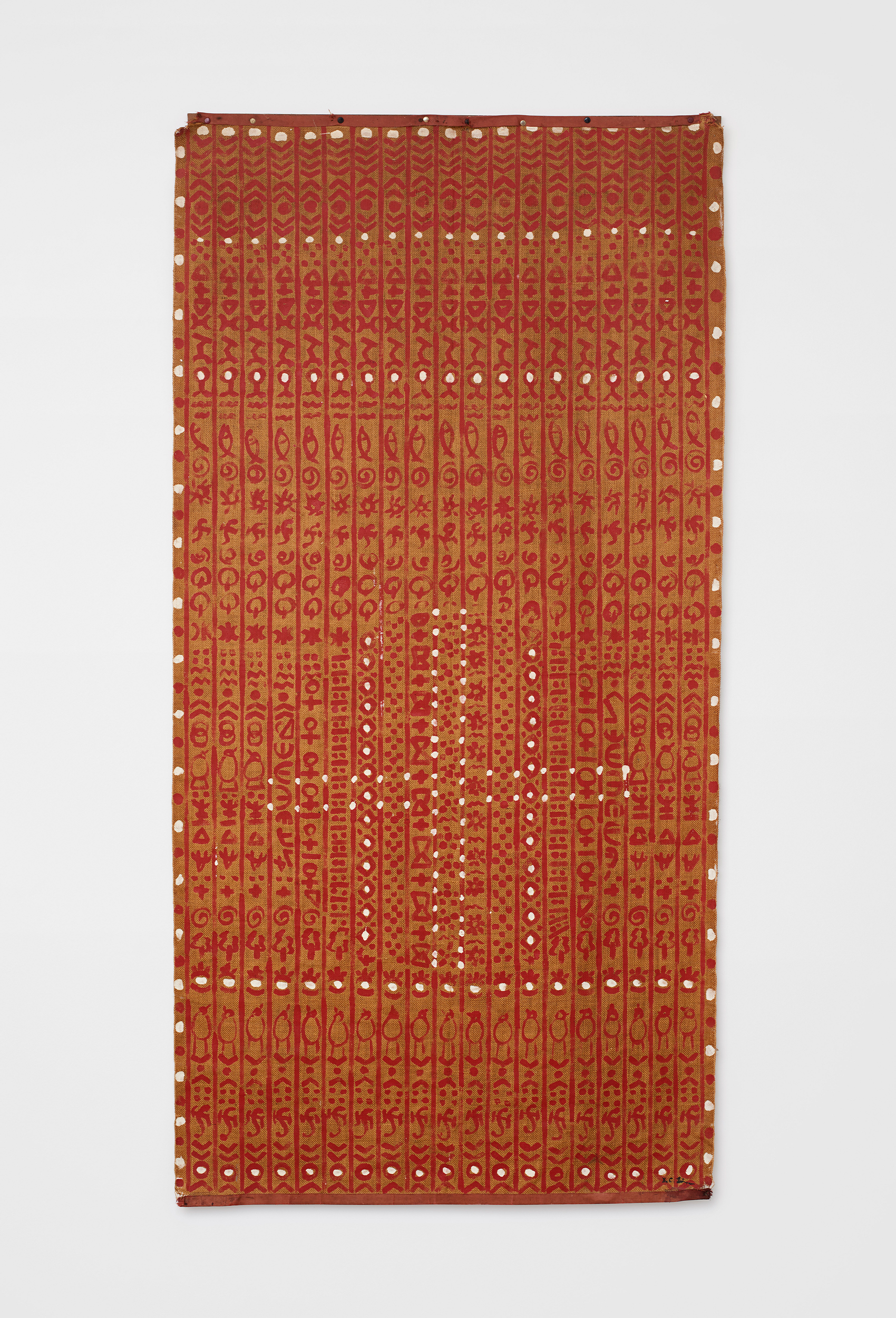
Copyright © Li Yuan-Chia. Courtesy of Richard Saltoun Gallery, London, Rome & New York.

Untitled (Hanging)

c. 1970
Acrylic on hessian
200 x 95 cm
Winsing Arts Collection

Cumbria Period

In 1969, Li Yuan-chia left London for the countryside of Cumbria, expanding his practice into spatial installations that engaged with the surrounding landscape. Following two studio shows in Boothby, he later purchased a farmhouse from artist Winifred Nicholson, which he single-handedly expanded into the LYC Museum and Art Gallery. From its opening in 1971 until 1982, the museum hosted over 200 exhibitions and published its own catalogues, becoming a key hub for modern art in northern England. Li continued developing interactive and haptic ‘cosmic point’ reliefs and totemic paintings. After closing the museum, he turned to photographic printmaking, hand-colouring his own black-and-white photographs. These images combined naturalistic and staged elements, sometimes featuring self-portraits with his face concealed. The lyricism, melancholy, and mystery of his late works reflect the state of mind in his final years.
Read more
Read less
No items found.
Artist Biography
Li Yuan Chia
Born in Guangxi in 1929, Li Yuan Chia moved to Taiwan after the war, entered the art department of Taipei Normal School. He was one of the founding members of the Oriental Painting Society, inspired by modern art ideas. Moving to Italy in 1961, he joined the European vanguard art movement Punto, where his work moved towards minimalism, conceptualization, and developed the core theme of his creative career, “Point”. Moving to London in 1967, he held several exhibitions with the Leeson Gallery, proposing the concept of Toyart, and became one of the earliest pioneers in the UK to practice participatory art and composite works. Moving to Cambria, Northern England in 1969, he independently expanded the farmhouse into the LYC Museum and Art Gallery, which from 1972 to 1982 hosted more than 200 exhibitions and became an important modern art hub in Northern England. His work spans calligraphy, painting, light relief, interactive installations, tapestries and photographic prints. At its core, “Dots” forms a unique artistic language that combines oriental spirit and cosmic imagery.
ARTIST PAGE