AA Publications, 1987

AA Publications, 1987
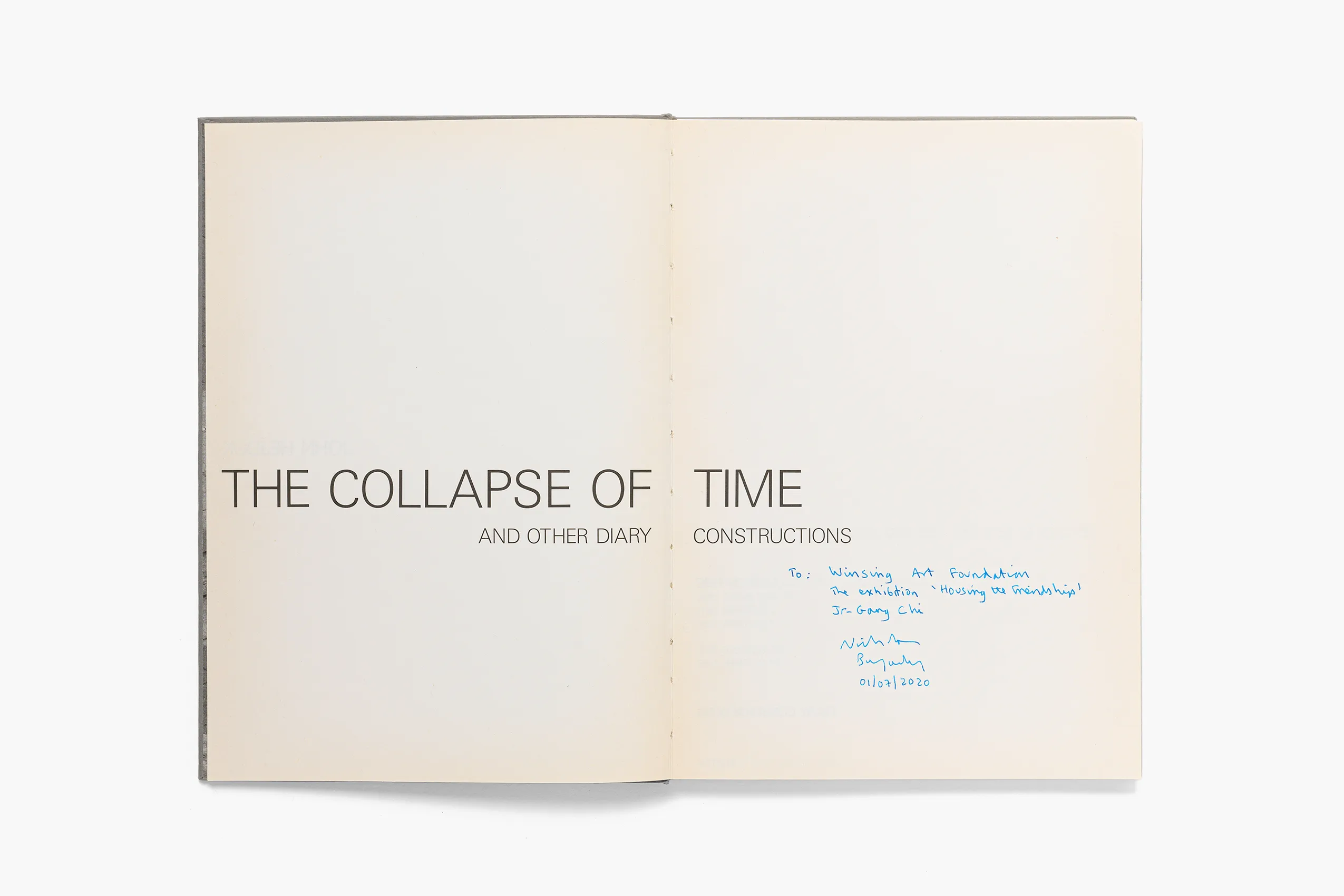
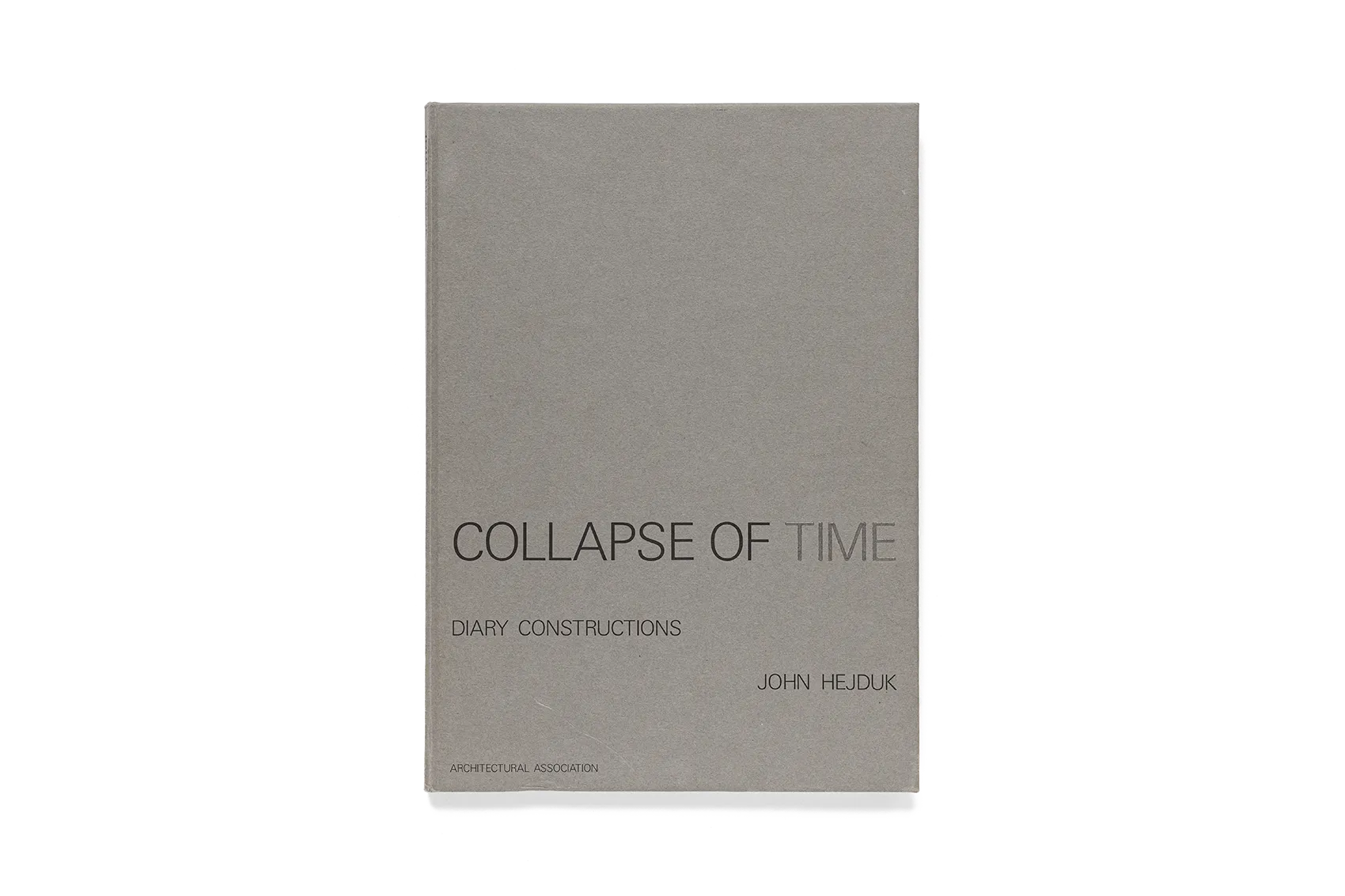
The Collapse of Time and Other Diary Constructions documents the process of constructing John Hejduk’s temporary memorial structure, The Collapse of Time, on Bedford Square at the Architectural Association (AA) School of Architecture in London during the fall of 1986. This collaborative effort by faculty and students accompanied the exhibition, Victims, and serves as the second volume in the AA School’s Texts series. This collector’s edition was gifted to the bookstore by Nicholas Boyarsky—son of Alvin Boyarsky, then AA School Director—to coincide with the 2020 Housing the Friendship exhibition at Winsing Art Place and bears a commemorative inscription.
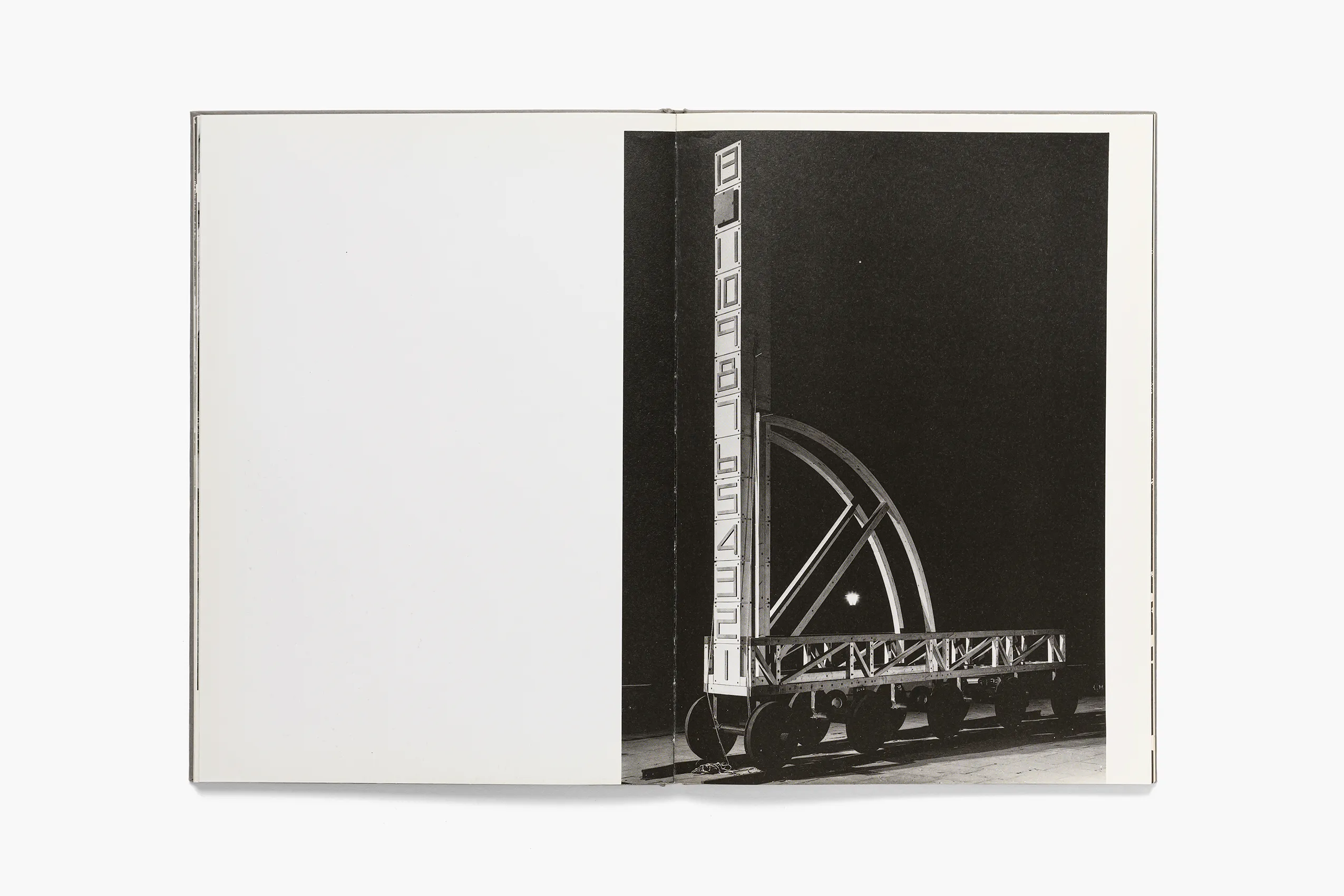
The Collapse of Time and Other Diary Constructions derives from a three-dimensional work created in 1986 by John Hejduk—the central figure of the exhibition Housing the Friendship—at Bedford Square, adjacent to the AA School of Architecture, led by his good friend Alvin Boyarsky, who was also an architect, educator, and publisher.
This installation functions as a “non-monumental declaration”—proclaiming that architecture’s focus lies in the “present,” where every passing second becomes the past, forever enshrined in history. For instance, if the current time is 12 o’clock, the number 12 is obscured by black, indicating that at this moment, the number 12 is in the air, not within this monument. The second section of this book comprises Hejduk’s private diaries and the conceptual development of this work, including design sketches and related photographic studies. Throughout his life, Hejduk explored the connection between people and space through architecture and art.
During the 2020 Housing the Friendship exhibition organized by the Winsing Arts Foundation, the curatorial team informed Nicholas Boyarsky—son of Alvin Boyarsky—about a special book exhibition in Taiwan themed around his father and John Hejduk. Upon learning this, Nicholas Boyarsky provided a copy of the out-of-print The Collapse of Time, personally inscribing the title page. This book not only completed the special exhibition but also symbolized how the friendship between architecture and books endures in different forms across time and space.