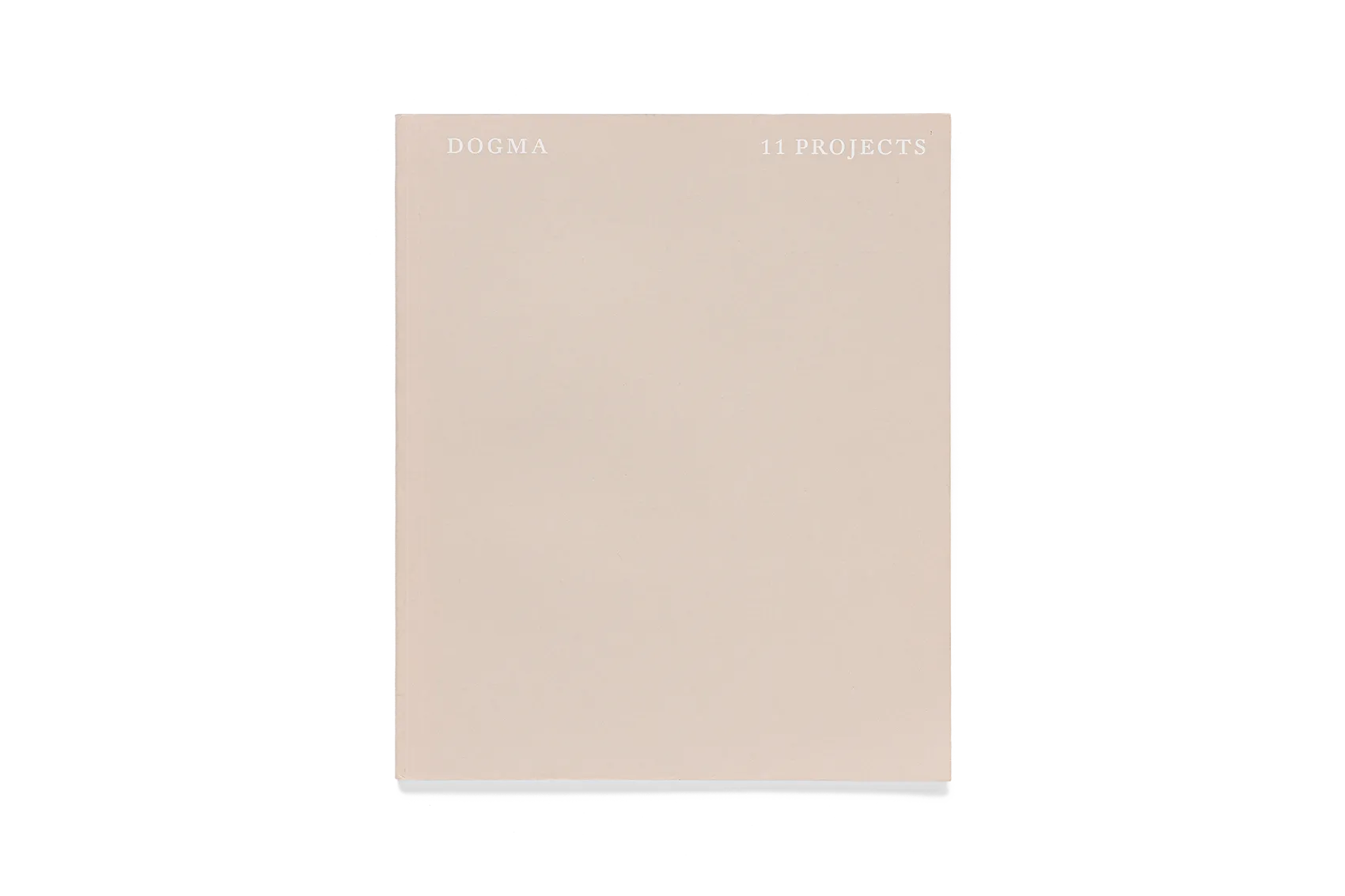
In Latin, the term "dogma" is defined as “philosophical creed” or “principle.” For Dogma, truth lies hidden beneath the clamor of progress, innovation, technology, and form—and architecture’s responsibility is to reveal it. This ethos is clearly expressed through Dogma’s design, research, exhibitions, and drawing practices, establishing it as one of the most significant architectural teams to combine design and discourse over the past two decades.
How did this unique collective form? In the 1990s, Dogma’s two directors, Pier Vittorio Aureli (1973–) and Martino Tattara (1976–), both studied at the IUAV University of Venice. At that time, IUAV inherited the legacy of Italian architectural critic Manfredo Tafuri (1935–1994) and architect Aldo Rossi (1931–1997), who explored the complex relationship among architecture, the city, and capitalism. Under this influence, they gradually developed original interpretations of key aspects of 1960s Italian avant-garde architecture.
Subsequently, Pier Vittorio Aureli pursued studies at the Berlage Institute in the Netherlands, where he became a student of Elia Zenghelis. It is not difficult to imagine how this further developed his design approach to the relationship between architecture and the city.
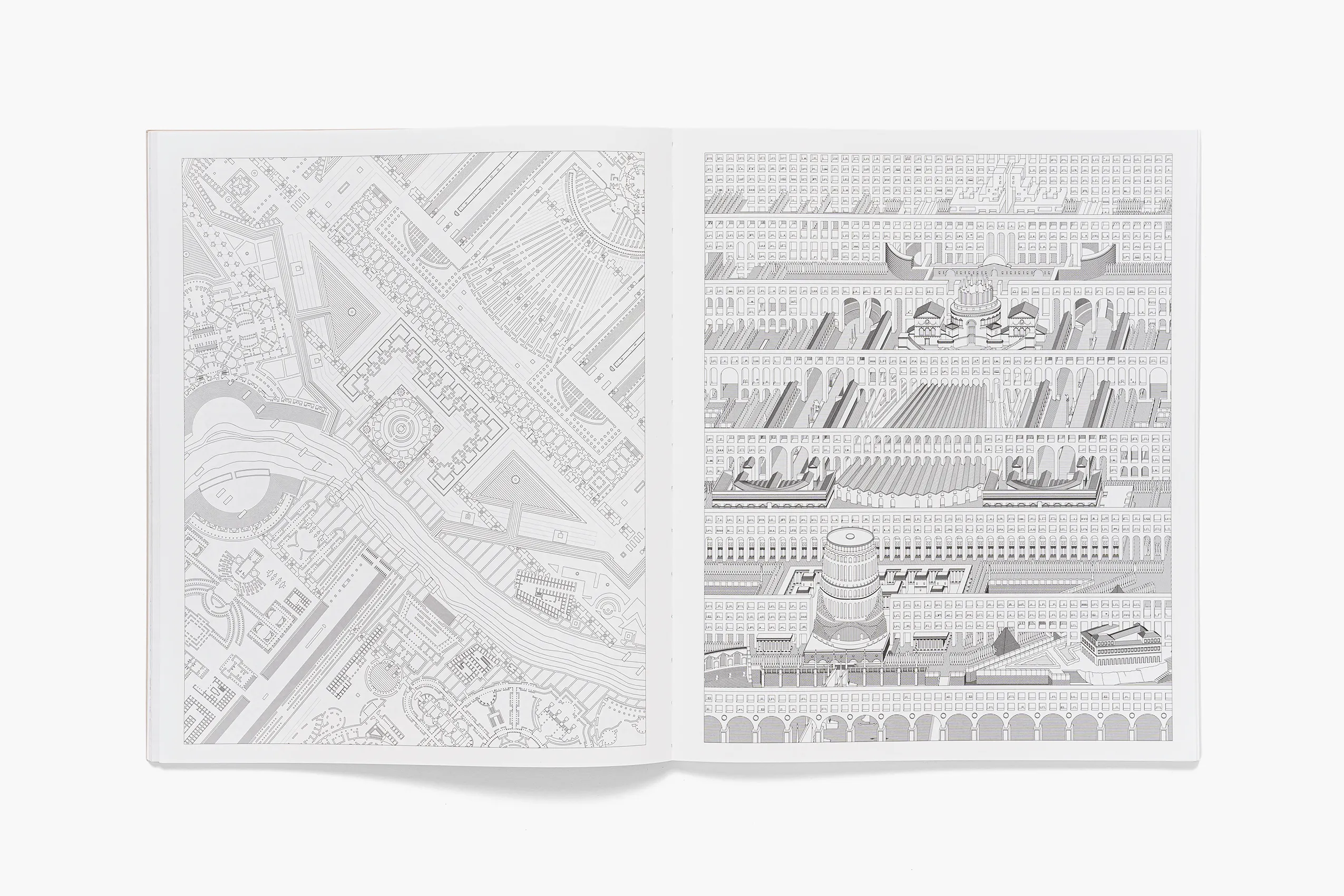
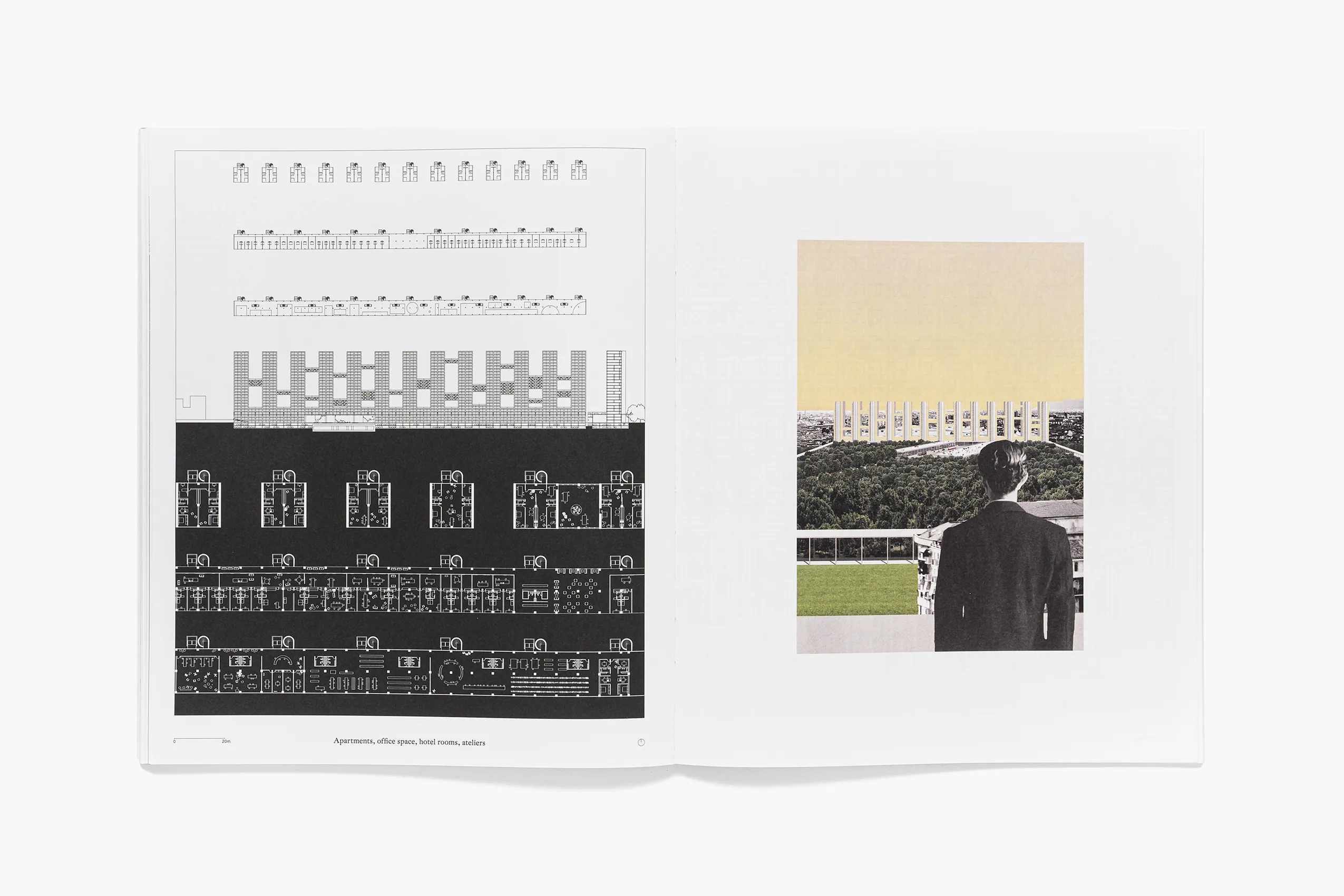
Beyond large-scale urban designs conveying the utopian spirit of earlier Italian architects like Archizoom and Superstudio, Dogma’s architectural drawings have become a significant reference point for contemporary “Post-Digital” painting. Aureli and Tatara’s article in this book, titled “Paint a Vulgar Picture on the Relationship between Images and Projection in Our Work,” discusses their process for creating distinctive architectural imagery—choosing to work against the prevailing trend of computer-generated graphics in the 1990s by employing hand-drawing, collage, and large-scale models to present their work; drawing inspiration from the minimalist compositional techniques of Düsseldorf School photographers such as Thomas Ruff 1958–) and Andreas Gursky (1955–); or from the works of Henri Rousseau and David Hockney (1937–), whose styles blend realism and abstraction. Through this research, perspective views are progressively flattened and subjective viewpoint eliminated to achieve the spatial ideal called “de-individuation” by the architects—spaces “usable by anyone.”
Dogma has participated in architectural competitions and commissions worldwide. Notably, in 2011, they entered the Taichung Central Park International Competition with the proposal titled “Ramones” (after the American rock band) and received an Honorable Mention. Beyond their extensive architectural designs, research projects, and publications, Aureli and Tatara also teach at multiple architectural institutions, including the Architectural Association School of Architecture (AA) in the UK, Yale University in the US, and KU Leuven in Belgium.