Tate Publishing, 2016
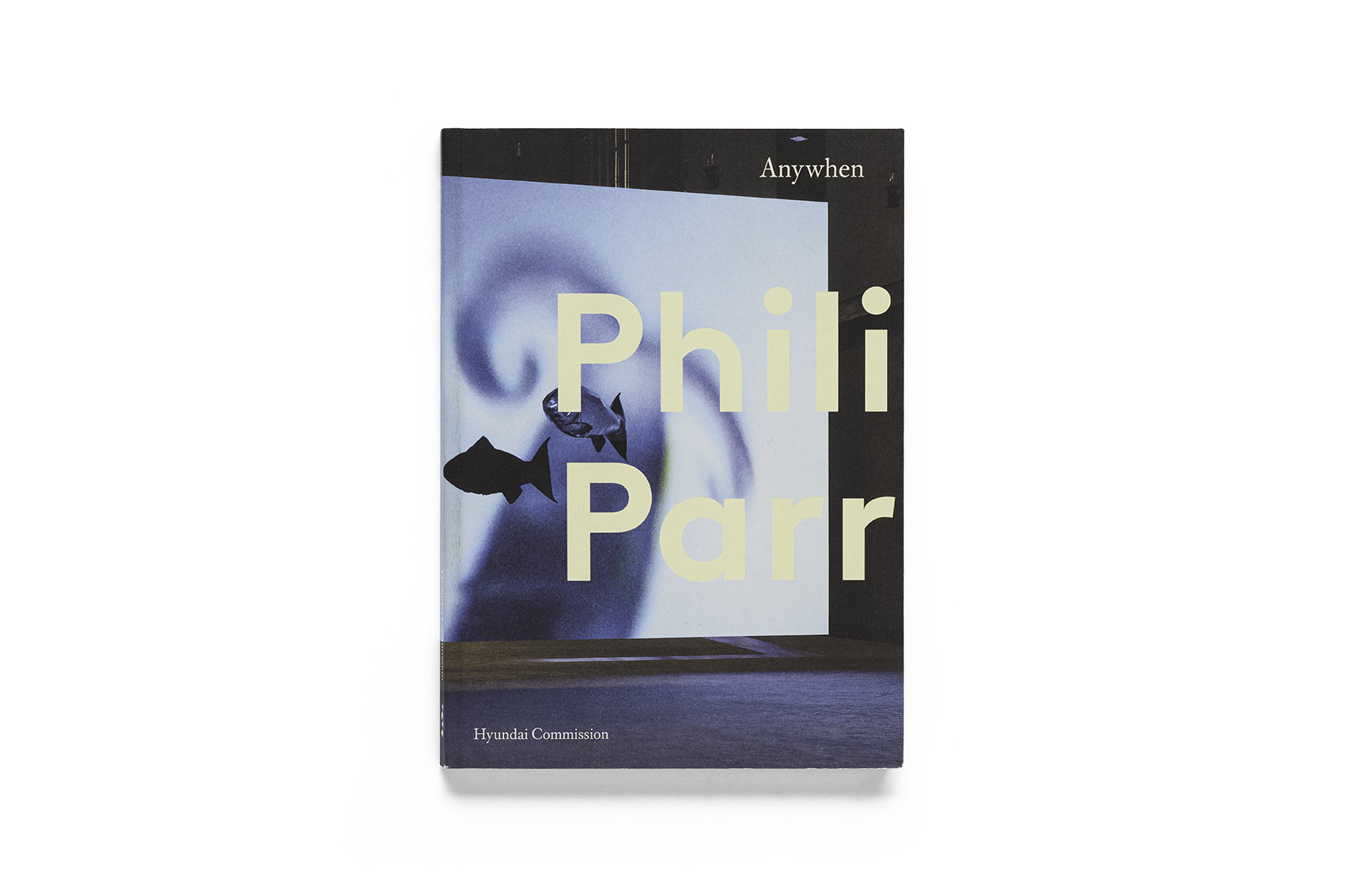
Hyundai Commission: Phillip Parreno
Tate Publishing, 2016
Since its official opening in 2000, Tate Modern’s Turbine Hall in London has commissioned numerous internationally renowned artists to create works for its space. From the inaugural exhibition by Louise Bourgeois, to Olafur Eliasson, Ai Weiwei, and Anish Kapoor, each exhibition embodied the artists’ reinterpretations of the space.
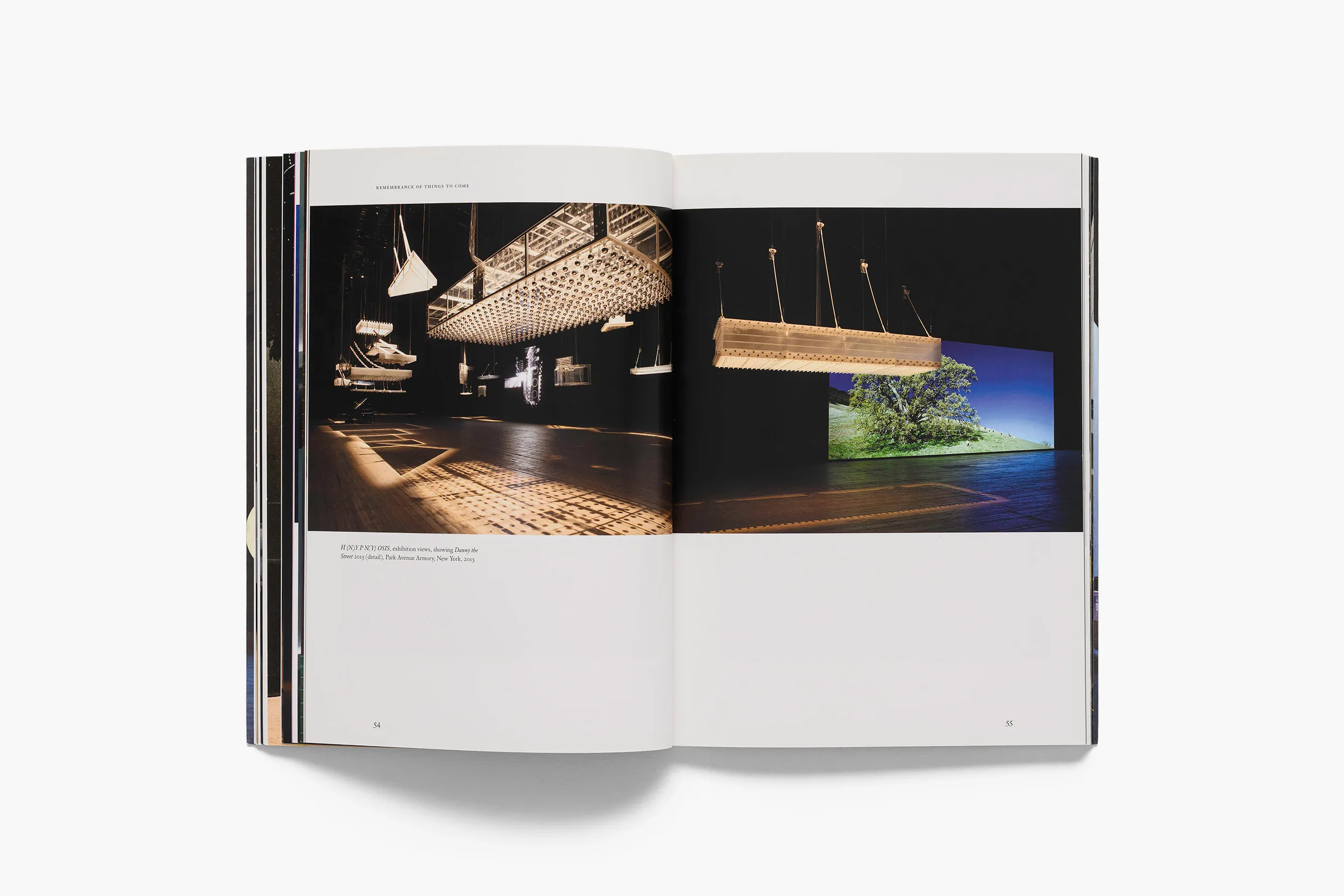
In 2017, Philippe Parreno transformed the Turbine Hall with the exhibition Anywhen, creating an immersive experience that responded to the architectural space and challenged the audience’s perception of time and space. The exhibition revolved around six key themes—“Time,” “Bioreactor,” “Space,” “Sound,” “Cinema,” and “Floating Fish”—engaging in a ripple of interactions. The “Bioreactor” was placed in a room adjacent to the Turbine Hall. A weather station on the museum’s roof transmitted outdoor data, such as wind speed, temperature, and light, to the bioreactor. Each variation in the data affected the fermentation of the yeast inside the bioreactor, and a computer program used these fermentation changes to control activities occurring in the exhibition space. These included the rhythm of lights in the work Marquee, images projected on screens, sounds echoing through the space, and the floating fish suspended in the air.
As the title suggests, Parreno’s Anywhen was related to time. He sought to create an exhibition with a life of its own, where visitors could experience the blurred boundaries between time and space. The Turbine Hall resonated with the sounds of the city, human voices, birdsongs, and even extinct in the Thames were brought back to the hall. The complex interplay of time and space was closely connected to the entire city, and each moment that occurred differed from the one before. The exhibition offered no fixed or “correct” routes of experience, aiming to challenge the audience’s preconceived notions of reality.